
If you’re planning to leave your home country and set yourself up in a brand new location, then you will need to put a lot of thought into where that destination will be.
Luckily, there are numerous resources to help with this. For instance, the world’s largest HR consulting firm, Mercer, releases an annual Quality of Living Index, which looks at cities across the world in terms of the quality of life they offer for residents.
Mercer evaluates many different factors when devising its list, including the economic environment, the standards of education, and quality of healthcare services (to name just a few). The result is a very comprehensive and reliable list ranking 230 countries, which is used to help employers place their employees on international assignments. It can also be an invaluable resource for expats, whether they’re looking to move for work, or simply for an interesting city to retire in where they and their family can enjoy a high quality of life. We’ve more recently conducted our own research and created a quality of life index for expats looking to move abroad.
One country’s cities that appear repeatedly on the list is Germany, which had an impressive five locations within the top 20 (and three in the top 10). This is not particularly surprising, as Germany’s cities always tend to rank highly year after year in the index.
The best cities to live in Germany
According to Mercer, these are the five best German cities to live in.
1. Munich – Ranked #3
Regularly appearing in Mercer’s top five, Munich is the German city cited as having the best quality of life and, just like Frankfurt, boasts one of the best public transport systems in the world, where a single ticket can get you access to the underground, suburban trains, trams and buses. Both cities were tied in second place in Mercer’s rankings for infrastructure.
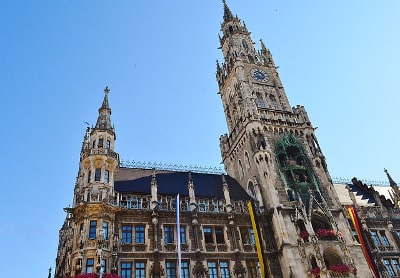
From a tourist’s viewpoint, the city is probably best known for being the host of the annual Oktoberfest, which attracts up to six million visitors. But if you’re not one for alcohol, the city is also rich in culture. With stunning architecture, such as the Neues Rathaus (new town hall), one of Europe’s biggest city parks (the “English Garden”), and many theatres and museums, With Mercer ranking it as the best city to live in Germany, Munich is certainly a beautiful place to move to.
2. Dusseldorf – Ranked #6
With efficient, cheap public transportation (more than 1,000 trains stop at its central station on a daily basis), you won’t have too much trouble getting around Dusseldorf. Like Frankfurt, Dusseldorf has a reputation for being a major centre for business and finance, but it’s also the main hub for advertising, with over 400 agencies based in the city. This western German city also has a strong fashion, music, and art scene.
3. Frankfurt – Ranked #7
Ranking highly for city infrastructure, Frankfurt is known for an excellent public transport system, and being Germany’s business and finance centre (you’ll find Blacktower’s financial advisers in the city).
Many famous trade shows take place in the city – over 30 hosted each year, in fact. One such trade show is the Frankfurt Book Fair, which is the largest trade show for books in the world based on the number of publishing companies in attendance. So, if you’re a writer looking to get published or are just an avid fan of literature, Frankfurt is the place to be, making it one of the best cities in Germany to live.
4. Berlin – Ranked #13
Germany’s capital and largest conurbation (it’s nine time bigger than Paris) is a city of over 3.6 million people. It’s very multicultural, and is Germany’s biggest university city, with three of the country’s top universities, including the Free University of Berlin. A survey published in 2016 by TransferWise named Berlin the best European city for English students.
But as well as being a bustling metropolis, the city is also perfect for those who love nature, as it’s a very green place, featuring many parks, woods and rivers; not to mention its abundance of history and museums that locals can visit in their free time.
5. Hamburg – Ranked #19
A port city located at the southern point of the Jutland Peninsula, Hamburg is the country’s second largest city, with a population of 1.8 million. It’s a major hub for science, research, and education.
If there’s one thing that you can be sure of in Hamburg, it’s that you won’t be short of places to shop – with many luxurious shopping streets, the city is Northern Germany’s centre for shopping and culture.
Plus, Berenberg Bank, the world’s second oldest bank, and the Miniatur Wunderland, the world’s largest model railway, can also be found in Hamburg; making it the best German city to live in for rail enthusiasts!
British expats in Germany and effective wealth management
Living in any one of the above places will certainly offer many benefits, but whether you live in one of these high-ranking cities or somewhere else in Germany, the quality of your lifestyle will be greatly helped if you have good financial health.
Blacktower’s financial advisers based in Germany can assist with your wealth management, making it easier for you to reach your savings goals and giving you peace of mind that you’re financially prepared for whatever life produces for you in the future. To find out more about how we can help you, contact one of our financial advisers today.
This communication is for informational purposes only and is not intended to constitute, and should not be construed as, investment advice, investment recommendations or investment research. You should seek advice from a professional adviser before embarking on any financial planning activity. Whilst every effort has been made to ensure the information contained in this communication is correct, we are not responsible for any errors or omissions.